

The Malaysian pharmaceutical industry has experienced gradual growth in the past few years, driven by the increasing demand for healthcare services, increased investment in healthcare infrastructure, and the demand for quality pharmaceutical products.
The healthcare industry in the country is also projected to remain on solid footing in the near future. According to the U.S. International Trade Administration (ITA), citing BMI Fitch Solutions, Malaysia’s healthcare expenditure is projected to grow at a compound annual growth rate (CAGR) of 8.7% between 2023 and 2028.
Therefore, selecting the appropriate pharmaceutical manufacturing partner has become a strategic business choice. A manufacturing partner that has implemented internationally recognized WHO-GMP standards can help pharmaceutical companies sustain business growth, ensure product quality, and support long-term manufacturing partnerships.
Malaysia’s Growing Pharmaceutical Industry
Malaysia’s healthcare system is well developed, with the government implementing various policies and incentives that boost the country’s pharmaceutical industry. It not only meets the domestic healthcare needs of the country but also plays a crucial role as a gateway to the wider ASEAN pharmaceutical market.

Malaysia’s pharmaceutical industry is also increasingly moving towards exports. In regulated markets, manufacturers are expected to have strong quality systems, detailed documentation, and adherence to global manufacturing practices to help streamline product registrations and gain the confidence of international markets.
To support this growth, many Malaysian pharma companies are taking advantage of pharmaceutical contract manufacturing, formulation development and technology transfer services by partnering with trusted foreign manufacturers.
What is WHO-GMP Certification?
WHO-GMP (World Health Organization Good Manufacturing Practices) is a recognized quality system that was developed to establish a standard for the consistent manufacture and control of pharmaceutical products.
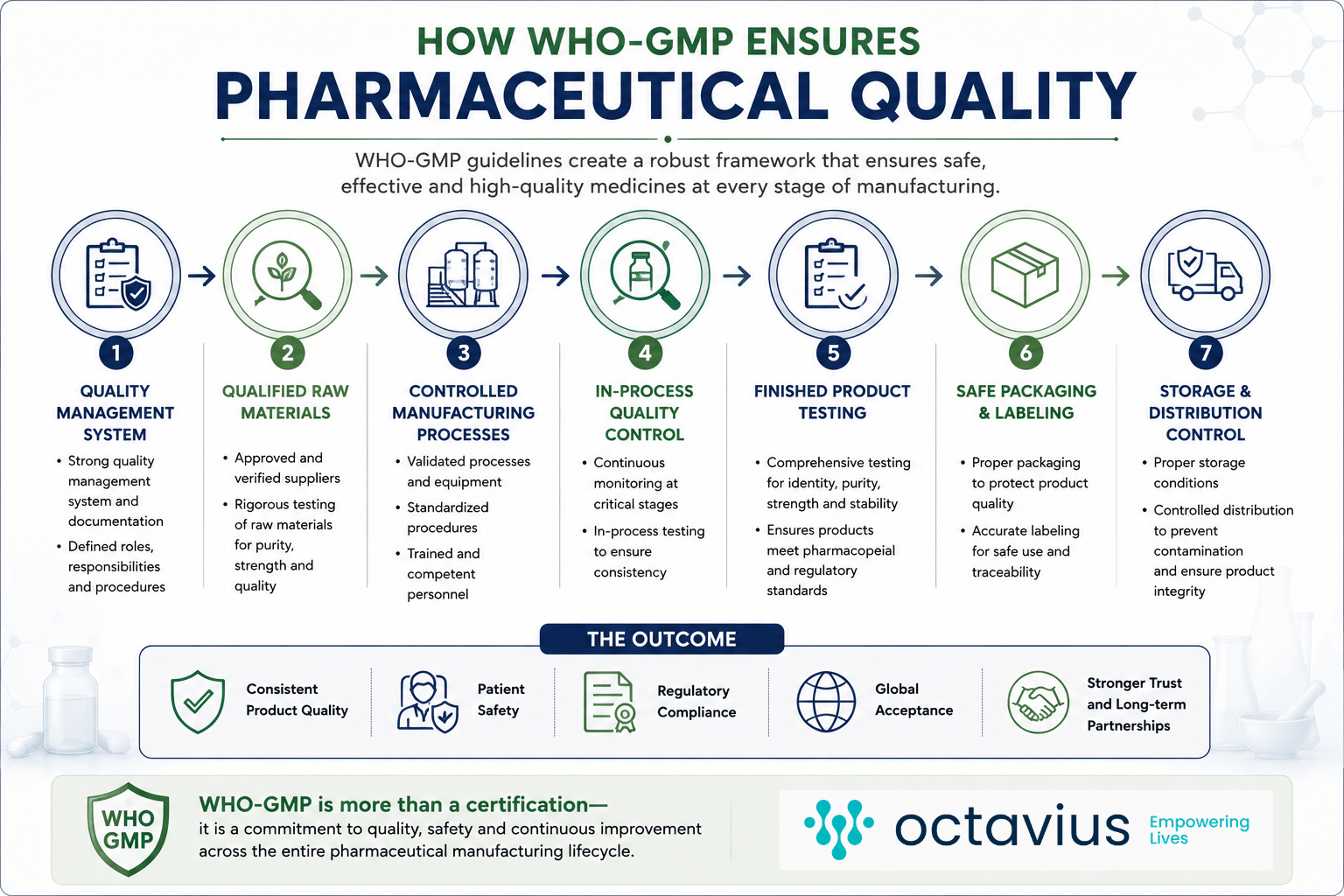
WHO-GMP is not about the quality of a final product as product testing is, but it is about the process of manufacturing the product. It sets up systematic controls on the design of the facilities, equipment qualification, personnel training, documentation, production procedures, sanitation, quality assurance, quality control, and process validation. These integrated quality systems contribute to reducing manufacturing variability and making sure that each production batch is safe, of good quality, and effective.
The Importance of WHO-GMP-Certified Manufacturing for Malaysian Pharmaceutical Companies
Consistent manufacturing quality is getting more and more significant as pharmaceutical companies expand their business. In addition to the regulatory aspect, WHO-GMP-certified pharmaceutical manufacturing guarantees product reliability, operational efficiency, and sustainable business growth.
A structured quality management system will provide batch-to-batch consistency by implementing validated manufacturing processes, standardized operating procedures, documentation, and quality assurance protocols. These systems lead to reduced manufacturing variability, improved manufacturing efficiency, and product reliability.
WHO-GMP-certified manufacturing also enhances regulatory confidence for Malaysian pharmaceutical companies that serve the local and export markets. Regulatory inspections, product registration, and market access to countries with high-quality expectations for pharmaceutical products are made easier by well-maintained documentation, traceability, and validated quality systems.
Reliable manufacturing systems also help to improve supply chain performance, minimize production risks, build customer confidence, and ensure patient safety beyond the regulatory level. Partnering with a WHO-GMP-certified pharmaceutical manufacturing company provides businesses with a solid foundation for maintaining quality and expanding internationally for sustainable growth.
The Advantages of Collaborating with a WHO-GMP-Certified Pharmaceutical Manufacturer
Selecting a WHO-GMP-certified pharmaceutical manufacturing company goes beyond fulfilling regulatory requirements. It helps pharmaceutical manufacturers establish a solid manufacturing base that is capable of ensuring product quality, streamlining operations, and driving long-term business expansion. Having a well-experienced pharmaceutical manufacturing partner can be advantageous for Malaysian pharmaceutical companies looking to grow their business in the global market as well as the domestic market.
Consistent Product Quality: One of the primary goals of any pharmaceutical manufacturer is to ensure product quality. Manufacturers certified by WHO-GMP use validated manufacturing processes, standardized operating procedures, and strong quality control to bring consistency to each production batch.
Regulatory Compliance: Across the world’s pharmaceutical markets, regulatory expectations remain constantly evolving. WHO-GMP manufacturers maintain documented quality systems, compliance measures, audits, product registration, and inspections.
Comprehensive documentation, validated manufacturing processes, and systems designed to ensure quality simplify regulatory compliance while limiting potential compliance risks for pharmaceutical companies that supply regulated markets.
Documentation and Traceability: Documentation is an integral part of pharmaceutical manufacturing. All manufacturing activities, process parameters, raw materials, and quality inspections should be documented, ensuring complete traceability.
Good recordkeeping helps ensure regulatory compliance and facilitates efficient process investigations, process improvements, and ongoing quality monitoring throughout the product lifecycle.
International Export Support: Many Malaysian pharmaceutical companies are going global, and compliance with recognized standards and practices is becoming a key requirement in many countries.
Such compliance facilitates easier regulatory submissions, buyer confidence, and export readiness to various markets.
What Malaysian Pharmaceutical Companies Should Look for in a Manufacturing Partner
Choosing a pharmaceutical manufacturing partner is a critical business decision that can significantly impact product quality, regulatory compliance, and potential business expansion. However, there are several other factors that pharmaceutical companies should look at before committing to a long-term manufacturing partnership rather than making production capacity the only deciding factor.
WHO-GMP-Certified Manufacturing Facilities: As a first step, it is necessary to ask whether the manufacturer has WHO-GMP-certified manufacturing facilities with internationally accepted quality standards. Certified facilities follow a structured approach to pharmaceutical manufacturing; they offer more assurance of manufacturing consistency and regulatory compliance.
Formulation Development Expertise: Not all pharmaceutical projects start with commercial production. There are many products that need to be optimized through formulation, stability testing, scale-up, and manufacturing validation prior to market introduction.
When working with a manufacturer that provides formulation development services, pharmaceutical companies can not only speed up the process of product development but also gain access to specialized scientific knowledge.
Technology Transfer Capabilities: Pharmaceutical companies have placed greater emphasis on technology transfer for new product introductions and/or manufacturing expansion. A capable manufacturing partner should be able to ensure seamless transfer of manufacturing knowledge, manufacturing processes, technical documentation, and quality systems, while maintaining manufacturing continuity.
How Octavius Pharma Supports Malaysian Pharmaceutical Companies
With more than 40 years of experience in the pharmaceutical industry, Octavius Pharma is a WHO-GMP-certified pharmaceutical manufacturing organization that serves the pharmaceutical industry globally with quality-focused manufacturing solutions.
Our integrated capabilities include Pharmaceutical Contract Manufacturing, Pharmaceutical Formulation Development, Technology Transfer, and Pharmaceutical Raw Material Outsourcing services that enable businesses to streamline product development and manufacturing with one trusted partner.
In addition to offering an extensive range of services, we also produce a variety of Finished Formulations, Direct Compressible (DC) Granules, Herbal & Food Supplements, and other pharmaceutical products while maintaining a high level of quality control and regulatory compliance throughout the manufacturing process.
With WHO-GMP-certified manufacturing facilities and ISO-certified quality systems, along with a dedicated research and development team, we are dedicated to providing pharmaceutical companies in Malaysia and internationally with reliable pharmaceutical manufacturing solutions to ensure quality, consistency, and long-term business relationships.
Conclusion
The pharmaceutical sector in Malaysia remains an attractive area for expansion, with rising demand for healthcare services, a growing pharmaceutical manufacturing sector, and Malaysia’s increased involvement in regional and international markets. In today’s competitive landscape and with the changing expectations of regulators, it is now critical for businesses to uphold high manufacturing standards for sustainable success.
By collaborating with a WHO-GMP-certified pharmaceutical manufacturer, Malaysian pharmaceutical manufacturers can improve product quality, regulatory compliance, manufacturing consistency, and build confidence among healthcare providers, distributors, and international buyers. The right partner, in addition to manufacturing capabilities, brings technical expertise, formulation support, quality assurance, and scalable manufacturing solutions that will enable future business growth.
At Octavius Pharma, our WHO-GMP-certified manufacturing facilities, full range of pharmaceutical services, and customer-centric approach are dedicated to supporting pharmaceutical companies. From contract manufacturing and formulation development to technology transfer and pharmaceutical manufacturing solutions, we’re committed to providing you with reliable, quality-driven partnerships that will help your business thrive in the long run.
Frequently Asked Questions (FAQs)
What is WHO-GMP certification?
WHO-GMP (World Health Organization Good Manufacturing Practices) certification is a globally recognized quality standard for pharmaceutical manufacturing. It establishes guidelines covering manufacturing processes, quality management systems, documentation, personnel training, sanitation, quality control, and facility operations. A WHO-GMP-certified pharmaceutical manufacturer follows standardized procedures to ensure pharmaceutical products are consistently manufactured to meet predefined quality, safety, and efficacy standards.
Why is WHO-GMP certification important in pharmaceutical manufacturing?
WHO-GMP certification is important because it helps ensure consistent product quality throughout the pharmaceutical manufacturing process. It reduces manufacturing risks by implementing validated procedures, robust quality assurance systems, and comprehensive documentation. For pharmaceutical companies, partnering with a WHO-GMP-certified manufacturer also enhances regulatory confidence, supports product registrations, and strengthens access to domestic and international markets.
How does WHO-GMP benefit Malaysian pharmaceutical companies?
WHO-GMP certification helps Malaysian pharmaceutical companies maintain internationally recognized quality standards while supporting regulatory compliance and manufacturing consistency. It also strengthens export readiness, improves supply chain reliability, and builds confidence among healthcare providers, distributors, and international buyers. Working with a WHO-GMP-certified pharmaceutical manufacturing partner enables companies to expand their business while maintaining high-quality pharmaceutical production.
What should companies look for in a pharmaceutical manufacturing partner?
Companies should evaluate a pharmaceutical manufacturing partner based on several factors, including WHO-GMP-certified facilities, manufacturing experience, formulation development expertise, technology transfer capabilities, robust quality assurance and quality control systems, regulatory documentation support, scalable manufacturing capacity, export experience, and transparent communication. These factors contribute to long-term manufacturing reliability and business success.
Is WHO-GMP certification required for exporting pharmaceutical products?
WHO-GMP certification is not mandatory for exports to every country, as regulatory requirements vary by market. However, many international buyers and regulatory authorities prefer or require pharmaceutical products to be manufactured in WHO-GMP-certified facilities. Partnering with a WHO-GMP-certified pharmaceutical manufacturer can improve regulatory acceptance and support smoother entry into global pharmaceutical markets.
What is the difference between GMP and WHO-GMP?
GMP (Good Manufacturing Practices) refers to the general principles and guidelines for pharmaceutical manufacturing. WHO-GMP is a specific set of GMP guidelines developed by the World Health Organization to promote internationally recognized quality standards. While both focus on product quality and patient safety, WHO-GMP provides a globally accepted framework that is widely recognized by pharmaceutical companies and regulatory authorities.
How does WHO-GMP improve product quality?
WHO-GMP improves product quality by implementing standardized manufacturing procedures, validated production processes, comprehensive documentation, and continuous quality monitoring. It emphasizes quality assurance throughout the manufacturing lifecycle rather than relying solely on finished product testing. This systematic approach helps ensure consistent batch-to-batch quality, product safety, and regulatory compliance.
Can WHO-GMP-certified manufacturers support formulation development?
Yes. Many WHO-GMP-certified pharmaceutical manufacturers provide formulation development services alongside commercial manufacturing. These services may include formulation optimization, process development, scale-up, stability studies, validation, and technology transfer. Integrating formulation development with manufacturing helps streamline product commercialization while maintaining quality and regulatory compliance.
What pharmaceutical products can be manufactured under WHO-GMP standards?
WHO-GMP-certified manufacturers can produce a wide range of pharmaceutical products, including tablets, capsules, oral liquid formulations, powders, syrups, suspensions, nutraceuticals, herbal products, and other finished formulations. The specific product portfolio depends on the manufacturer’s facilities, expertise, and regulatory approvals.
Why do international pharmaceutical companies choose WHO-GMP-certified manufacturers?
International pharmaceutical companies choose WHO-GMP-certified manufacturers because they offer consistent product quality, internationally recognized manufacturing standards, robust quality systems, comprehensive regulatory documentation, and reliable manufacturing processes. These capabilities help reduce operational risks, support global market expansion, and foster long-term manufacturing partnerships built on quality, compliance, and trust.